The Kinetic Metamorphosis: Unmanned Systems and the Reconstruction of Modern Warfighting in Ukraine
The contemporary conflict in Ukraine has fundamentally restructured the theoretical and practical foundations of military science, signaling a transition from the industrial-age mass of the twentieth century to a paradigm defined by ubiquitous autonomous systems, transparent battlefields, and compressed sensor-to-shooter cycles. This evolution is not merely a quantitative increase in remote-controlled hardware but a qualitative shift in how military force is generated, projected, and sustained in a high-attrition environment. The conflict serves as both a warning and a blueprint for military planners, demonstrating that technological innovation and organizational adaptability have become the defining characteristics of military effectiveness in the twenty-first century.
Strategic Context and the Democratization of Air Power
Historically, air superiority was the exclusive domain of wealthy nations capable of sustaining expensive fifth-generation aircraft and specialized pilot training programs. The Ukrainian theater has invalidated this assumption through the democratization of air power, where affordable, attritable drones enable even technologically inferior forces to contest airspace and project power previously considered beyond their reach. The proliferation of small, low-cost systems has effectively lowered the barriers to entry for aerial warfare, allowing “most if not all of the airpower roles” to be conducted for the price of a drone, a laptop, and creative imagination.
This transformation is driven by five interconnected characteristics: the rise of autonomous systems, the information domain as a critical battleground, electronic warfare (EW) and spectrum superiority, the challenges of sustaining logistics in contested environments, and the rapid evolution of air defense strategy. These factors have forced a shift away from massed offensives and toward decentralized, dispersed tactics to survive in an environment of total battlefield transparency.
Evolution of Operational Phases (2014–2025)
The use of unmanned aerial vehicles (UAVs) in Ukraine has evolved through several distinct phases, reflecting a continuous cycle of innovation and adaptation between Russian and Ukrainian forces.
| Phase | Timeframe | Characteristics | Key Systems |
| Initial Inflection | 2014–2021 | Reconnaissance and fire correction in Donbas; development of volunteer ecosystems. | DJI Mavic, R18, early ISR platforms. |
| MALE Dominance | Early 2022 | Large, medium-altitude drones used for precision strikes on convoys. | Bayraktar TB2. |
| Adaptive Resistance | Mid-2022 | IADS and EW adaptation forced a pivot to smaller, attritable tactical drones. | DJI Mavic, Phoenix Ghost, Switchblade. |
| FPV Revolution | 2023 | Scaling of DIY kamikaze drones; use of hobbyist tech for precision anti-armor strikes. | Custom 7-inch and 10-inch FPVs. |
| Deep Strike Escalation | Early 2024 | OWA drone campaigns targeting strategic rear infrastructure and oil refineries. | UJ-26 Beaver, Lyutyy, Bober. |
| Maritime Supremacy | 2023–2024 | USV campaigns neutralizing the Black Sea Fleet and reopening export corridors. | Magura V5, Sea Baby. |
| Autonomous Integration | 2024–2025 | Introduction of AI-guided terminal flight and fiber-optic-guided resilience. | Shrike Fiber, AI-enabled FPVs. |
| Swarm & Interception | 2025+ | Interceptor drones targeting other UAVs; nascent swarm coordination. | Win_Hit, Mothership Relays. |
The transition from the Bayraktar TB2’s initial successes to its reduced effectiveness highlights the rapid adaptation cycle of Russian integrated air defense systems (IADS). As Russia optimized its electronic warfare measures, Ukraine was forced to pivot toward mass-produced, low-cost drones as part of its operational tactics.
Taxonomy and Technical Specifications of Unmanned Systems
The diversity of systems deployed in Ukraine ranges from micro-UAVs for squad-level reconnaissance to multi-tonne platforms for strategic deep strikes.
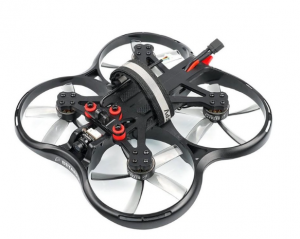
FPV (First-Person View) Strike Drones
FPV drones have become the primary kinetic asset for precision strikes within 15 kilometers of the front line, often equated to “sniper weapons” due to their ability to fly through open hatches and doorways.
| System Model | Origin | Range (km) | Top Speed (km/h) | Payload (kg) | Estimated Cost |
| Vyriy-10 | Ukraine | 5–15 | 140 | 1.5–3.0 | $400–$600 |
| Shrike Fiber | Ukraine | 5–10 | 120 | 2.5 | $700 |
| Osa FPV | Ukraine | 15+ | 160 | 2.5 | $500 |
| Win_Hit | Ukraine | 5 | 300 | 1.0 | $600 |
These systems use specially designed factory-made ammunition or improvised RPG-7 warheads. The “Win_Hit” variant is a specialized air-to-air interceptor reaching speeds of 300 km/h, designed specifically to take down Russian reconnaissance drones and even helicopters. Footage analyzing the tactical feasibility of such interceptions, such as the downing of a Ka-52 attack helicopter, demonstrates the evolving role of high-speed FPVs in modern aerial combat (https://www.youtube.com/watch?v=n990Afs6QtA).
ISR (Intelligence, Surveillance, and Reconnaissance) Drones
Battlefield transparency is maintained by a multi-layered ISR architecture that ensures no concentration of force can occur unobserved.
- Tactical Micro-UAVs: Systems like the Black Hornet Nano (under 2 kg) provide immediate situational awareness for infantry units in urban or wooded terrain.
- Small Quadcopters: The DJI Mavic 3/4 series and Autel Evo models are the ubiquitous “workhorses” of the front line, used for artillery spotting and light bomb dropping.
- Fixed-Wing Reconnaissance: Long-range ISR platforms like the Leleka-100, Shark, and Russian Orlan-10 operate 50–100 kilometers behind lines to designate targets for high-value assets like HIMARS or Lancet loitering munitions.
Loitering Munitions and Long-Range Strike Platforms
These “one-way” drones blur the line between UAVs and cruise missiles, staying airborne to loiter over target areas before executing a terminal dive.
| Platform | Role | Range (km) | Warhead (kg) | Powerplant |
| Shahed-136 (Geran-2) | OWA Strategic | 1,500–2,000 | 40–50 | Piston Engine |
| Lancet-3 | Loitering Tactical | 40–70 | 3–5 | Electric |
| UJ-26 Beaver (Bober) | OWA Strategic | 800–1,000 | 20 | Piston (Canard) |
| Lyutyy (Fierce) | OWA Strategic | 1,000+ | 50 | Piston (Traditional) |
| AQ-400 Scythe | OWA Attritable | 750 | 32–70 | Piston (Box-like) |
| Switchblade 600 | Loitering Anti-Armor | 40 | 15 | Electric |
The Shahed-136, costing approximately $35,000 per unit, provides Russia with a cost-effective alternative to multi-million dollar cruise missiles like the Kalibr. These are often used in “swarm-like” tactics, preceded by “Gerbera” low-tech decoy drones to saturate Ukrainian air defense radars and force the expenditure of expensive interceptors.
Industrial Scale and the Economics of Attrition
The scale of drone production has become a primary metric of national capability. Ukraine’s industry has transformed from a niche sector into a cornerstone of the wartime economy.
Ukrainian Production Scaling and Digital Procurement
In 2024, Ukraine produced approximately 2.2 million UAVs, with projections for 2025 exceeding 4.5 million units. The state budget allocated a record 775 billion hryvnias (~$18.5 billion) for domestic drone procurement in 2025.
| Year | Production Volume | Number of Enterprises | Net Sector Profit (UAH) |
| 2022 | ~100,000 | 41 | -2 Billion (Loss) |
| 2023 | ~500,000 | 132 | 4.6 Billion |
| 2024 | 2.2 Million | 183 | 13.8 Billion |
| 2025 (Proj.) | 4.5 Million+ | 290+ | 25 Billion+ |
To manage this decentralized industry, the Ministry of Defence launched “DOT-Chain Defence” in June 2025, a digital platform enabling brigades to order FPV drones directly from authorized suppliers like Vyriy, Escadrone, and Reactive Drone. This system aims to solve the procurement bottlenecks caused by certification regulations introduced in late 2024. Despite this, corruption risks remain a concern due to the classified nature of funding and the reliance on non-transparent tenders for roughly 85% of drone orders.
Russian Military-Industrial Adaptation
Russia has moved from initial improvisation to a top-down, institutionalized approach. The Alabuga factory in Tatarstan is a primary site for the mass production of the Geran-2, fulfilling a $1.75 billion franchise deal with Iran to build 6,000 units by September 2025. Russia’s military AI likely supports data analysis and rapid decision-making through the Rubikon Center for Advanced Unmanned Technologies.
In December 2024, the Russian MoD reported that troops used upward of 3,500 drones daily, while President Putin noted in April 2025 that even 4,000 FPV drones daily were insufficient for operational needs. This massive proliferation has resulted in drones accounting for roughly 60–70% of vehicle losses and 70–80% of battlefield casualties by early 2025.
The Maritime Frontier: USVs and Asymmetric Dominance
The use of Unmanned Surface Vessels (USVs) represents perhaps the most revolutionary application of drone technology, allowing Ukraine to effectively neutralize the Russian Black Sea Fleet’s dominance.
Ukrainian Maritime Drone Taxonomy
| Model | Variant | Length | Max Speed | Payload | Operational Role |
| Magura V5 | Attack | 5.5 m | 78 km/h | 320 kg | Anti-ship / Kamikaze. |
| Magura V7 | Multi-role | 7.2 m | 72 km/h | 650 kg | Anti-air / ISR / Strike. |
| Sea Baby | Multipurpose | 6.0 m | 90 km/h | 850 kg | Port strikes / Mine laying. |
| Sub Sea Baby | UUV | Unknown | Unknown | Unknown | Undersea hull strikes. |
The Magura V5, developed by the HUR (Military Intelligence), is designed for mobile targets at sea, while the Sea Baby, developed by the SBU (Security Service), is optimized for static infrastructure. A Magura V5 drone strike on the corvette Ivanovets in February 2024 was recorded in dramatic detail, showing the vulnerability of conventional naval assets to coordinated USV attacks (https://www.youtube.com/watch?v=n990Afs6QtA).
By 2025, the V7 variant had been armed with AIM-9 Sidewinder and R-73 missiles, resulting in the historic shootdown of two Russian Su-30SM fighter jets west of Novorossiysk on May 2, 2025. This capability shift, from surface-to-surface to surface-to-air USV strikes, has forced the Russian Navy to abandon Sevastopol and retreat to ports in the eastern Black Sea.
Battlefield Tactics: The “Drone Line” and the “Human Safari”
Tactical innovation has kept pace with technical scaling, leading to the creation of permanent drone subunits within the Table of Organization and Equipment (TOE) of maneuver units.
The Kill Zone Concept
In February 2025, Ukraine implemented the “Drone Line,” grouping the five most effective drone units (including “Magyar’s Birds”) to create a 10–15 kilometer deep “kill zone”. Within this zone, drones are operated in “stacks” rather than autonomous swarms. A stack typically consists of:
- A Mothership Drone: Acts as a signal relay, often carrying an FP-1 or Firepoint system with a Starlink terminal to extend range up to 1,600 kilometers.
- ISR Drones: Continuously sweep the sector for movement.
- Strike FPVs: Launched to engage confirmed targets.
This coordination is facilitated by software-based battle networks and commercial communication platforms, allowing multiple operators to share a common operational picture.
Impact on Maneuver and Urban Warfare
Battlefield transparency has made massed armor assaults nearly impossible. The Battle of Vuhledar serves as a primary case study; in early 2023, the Russian 155th Naval Infantry Brigade lost 130 units of equipment, including 36 tanks, as their columns were systematically dismantled by Ukrainian drone reconnaissance and precise artillery.
In urban environments like Bakhmut, drones reaped a devastating toll by dropping munitions into open hatches and trenches. However, this tactical efficacy has a darker side. Along the Dnipro River and in the Kharkiv region, Russian FPV “hunt” campaigns, dubbed “human safari,” have institutionalized harm against civilians to make life in near-rear areas untenable. This includes the targeting of civilian cars, cyclists, and pedestrians with FPV drones, a practice that international inquiries have categorized as potential war crimes.
Electronic Warfare and the Race for Spectrum Dominance
The conflict is a continuous cycle of adaptation between anti-drone measures and drone improvements, with no permanent advantage.
Spectrum Protection and Spoofing
Standard drone operations are highly vulnerable to jamming of GNSS and radio links. To counter this, both sides have adopted frequency-hopping, mesh-networked radios (such as the StreamCaster systems used in the RAM-2X drone), and automated flight patterns.
Russia’s integration of the “Kometa” navigation system—an eight-element GPS-controlled antenna—has increased the resilience of their loitering munitions against Ukrainian EW spoofing. Conversely, Ukraine has utilized machine learning to enable “terrain mapping,” where the drone navigates autonomously by understanding its position relative to the geography below, making it impervious to radio jamming.
Kinetic and Non-Kinetic Anti-Drone Systems
The demand for cost-effective drone defenses has revitalized older technologies and spurred the development of new laser and missile platforms.
| System | Role | Primary Mechanism | Notable Specifications |
| Gepard | C-sUAS / Missile | Twin 35mm Cannons | Radar-guided; 1,100 rounds/min; £480 per round. |
| VAMPIRE | C-sUAS / Tactical | Laser-guided Rockets | 70mm APKWS II; HMMWV-mounted. |
| Terrahawk Paladin | Point Defense | 30mm Mk44 Cannon | Remotely operated; 360-degree radar view. |
| VAMPIRE Stalker XR | Swarm Defense | 12-rocket cassette | Extended range; ISV-mounted. |
| Killcode | Electronic Defense | Wide-band Jammers | Disrupts Group 1–3 UAV signals. |
The Flakpanzer Gepard has emerged as the most cost-effective counter to the Shahed-136, protecting critical infrastructure at a fraction of the cost of Patriot or S-300 interceptors. Meanwhile, the VAMPIRE system has been successfully used not just to destroy drones but to attack ground targets, highlighting its multi-mission utility.
The Frontier of Autonomy: Fiber-Optics and Artificial Intelligence
The innovation cycle reached a new peak in 2024 and 2025 with the deployment of systems specifically designed to bypass the electromagnetic struggle entirely.
Fiber-Optic Resilience
Fiber-optic drones, such as the Shrike Fiber, use a physical wire to transmit video and control signals. This makes them 100% immune to electronic warfare and jamming.
- Operational Success: In September 2025, Ukrainian fiber-optic drones hunted Russian logistics in the Lyman direction with absolute impunity from EW (https://www.reddit.com/r/ukraine/comments/1t2ilk1/what_first_sighting_of_ukrainian_fp12_mothership/).
- Counter-Measures: Russian forces have been observed using high-intensity laser beams to attempt to “fry” the optical cables of these drones in flight.
AI Integration and Machine Learning
AI in the Ukrainian conflict is primarily used as an enabler rather than an independent decision-maker.
- Computer Vision: Modules integrated into FPV flight controllers allow the drone to “lock on” to a target in its final 500 meters of flight, compensating for signal loss due to jamming or the Earth’s curvature (https://www.youtube.com/watch?v=_aqrVqxyfIA).
- Data Processing: AI algorithms filter massive amounts of drone feed data, satellite imagery, and sensor inputs to allow commanders to act on processed information, significantly compressing the decision cycle.
- Navigation: Machine learning enables OWA drones to navigate autonomously across hundreds of kilometers without satellite support, identifying waypoints through visual recognition.
Deep Strike Campaigns and Strategic Attrition
The escalation of long-range OWA drone strikes since 2024 has taken the war deep into the Russian interior, targeting the economic centers of gravity that fund the Kremlin’s war effort.
Strategic Targeting of Energy Infrastructure
Ukrainian strikes on oil refineries, such as those in Tuapse and Saransk, have demonstrated the ability to strike targets over 1,750 kilometers behind enemy lines. These operations have:
- Reduced Refining Capacity: Temporarily halting approximately 14% of Russia’s total refined fuel output by April 2024.
- Disrupted Logistics: Forcing fuel price spikes and halts in exports within Russia.
- Diverted Air Defenses: Forcing the Russian MoD to pull Pantsir systems from the front to protect strategic sites and high-priority individuals, such as the President’s summer residence.
The Rise of “Missile-Drones”
Ukraine’s “Palanytsia” and “Lyutyy” represent a new class of long-range weapons—hybrid jet-powered or long-endurance piston platforms that carry significant warheads while maintaining low cost. These systems have been used to strike strategic airfields, such as Engels, and aircraft repair plants, damaging advanced fighter jets and strategic bombers like the Tu-95. The “Night of Fire” in Rostov, where 6,000 Russian FPV drones were reportedly destroyed in a single logistics hub strike, illustrates the vulnerability of centralized manufacturing and storage to these long-range assets (https://www.youtube.com/watch?v=WBkUniTTO2Q).
Analytical Outlook and Operational Realities
Far from replacing humans on the battlefield, drones have increased the demand for skilled labor, judgment, and organizational capacity.
The Myth of Replacement vs. The Reality of Augmentation
Evidence from the conflict rejects the assumption that drones will render human decision-making obsolete. Instead, they have generated new military occupational specialties: imagery analysts, EW teams, and rapid-modification units. Drones enhance sensing and striking, but they cannot occupy or hold ground, which remains the domain of the infantryman.
Institutionalizing the Unmanned Domain
The establishment of the Unmanned Systems Forces (USF) in June 2024 as an independent branch of the AFU signaled the world’s first formal integration of drone warfare into a national military doctrine. Russia followed suit in November 2025 with its own Unmanned Systems Forces, acknowledging the strategic permanence of these technologies.
Strategic Implications for Global Warfare
The Ukrainian experience suggests that future conflicts between sophisticated forces will be characterized by extreme battlefield transparency and high attrition of both crewed and uncrewed platforms. Military effectiveness in this environment requires:
- Rapid Innovation Cycles: The ability to modify software and frequencies weekly to bypass enemy EW.
- Industrial Resilience: Moving from centralized factories to decentralized “makeshift” assembly to survive long-range strikes.
- Multi-Domain Teaming: Integrating AI into existing systems to reduce operator workload rather than pursuing full autonomy.
Critical Resources for Tactical Analysis
The following channels and analysts have become primary sources for understanding the tactical and technical shifts in the conflict:
- Anders Puck Nielsen (@anderspuck): High-level strategic and naval analysis. https://www.youtube.com/@anderspuck.
- Perun (@PerunAU): Detailed analysis of defense economics and logistics. https://www.youtube.com/@PerunAU.
- Combat Veteran Reacts (@CombatVeteranReacts): Technical breakdown of combat footage and tactical errors. https://www.youtube.com/@CombatVeteranReacts.
- Kyiv Post & United24 Media: Documentaries on frontline drone units like “Magyar’s Birds.” https://www.youtube.com/watch?v=9hzIMI2DLys.
- Suchomimus: OSINT verification of satellite imagery and drone interceptions. https://www.youtube.com/watch?v=m2-p2srIRLI.
Conclusion: The New Doctrine of Unmanned Power
The war in Ukraine has transitioned from a conventional invasion to a “war of industrial-scale automation”. As of 2025, the battlefield is defined by a “wall of drones” that creates a lethal barrier for both men and machines. The democratization of air power, the neutralization of conventional naval fleets by USVs, and the escalation of unjammable fiber-optic and AI-driven systems have created a new operational landscape. For professional military planners, the Ukraine conflict is not merely a regional war but a definitive blueprint for the future of warfare—where the edge goes to the side that can adapt faster, produce more, and integrate technology more seamlessly into the human component of combat.
doria.fiRussia’s Adaptation in the War against Ukraine (2022–2025) – DoriaOpens in a new windowcsis.orgLessons from the Ukraine Conflict: Modern Warfare in the Age of …Opens in a new windowifri.orgMapping the MilTech War: Eight Lessons from Ukraine’s Battlefield – IfriOpens in a new windowresearchcentre.army.gov.auDrone Warfare in Ukraine: From Myths to Operational Reality – Part 1Opens in a new windowmwi.westpoint.eduBattlefield Drones and the Accelerating Autonomous Arms Race in UkraineOpens in a new windowarmyupress.army.milRed Skies Ahead: Russia Planning for Its Drone-Driven Army of TomorrowOpens in a new windoworfonline.orgUkraine’s Drone War: From Improvisation to Systematised CombatOpens in a new windowosw.waw.plGame of drones: the production and use of Ukrainian battlefield …Opens in a new windowcnas.orgEvolution Not Revolution – CNASOpens in a new windowcsis.orgThe Russia-Ukraine Drone War: Innovation on the Frontlines and Beyond – CSISOpens in a new windowtandfonline.comFull article: Precise Mass in Action: Assessing Ukraine’s One-Way Attack Drone CampaignOpens in a new windowapnews.comUkraine says it shot down 33,000 Russian drones in March, a monthly recordOpens in a new windowen.wikipedia.orgMAGURA V5 – WikipediaOpens in a new windowreddit.comWhat First Sighting of Ukrainian FP-1/2 Mothership Carrying Starlink-Enabled FPV Drones Reveals – RedditOpens in a new windowunited24media.comMilitary Drone Types Explained: UAVs, FPV & Drone Warfare (2025 …Opens in a new windowdignitas.fundFPV Drone Ukraine: Use and Types – Dignitas FundOpens in a new windowyoutube.comCan Tiny Fibre Optic FPV Drones REALLY Knock Down Expensive Attack Helictopers? | DCSOpens in a new windowwarpowerukraine.comUkrainian Drone Force – Warpower: UkraineOpens in a new windowhisutton.comGuide To Ukraine’s Long Range Attack Drones | Covert ShoresOpens in a new windowarmyupress.army.milRussia’s Changes in the Conduct of War Based on Lessons from …Opens in a new windowunderstandingwar.orgRussian Offensive Campaign Assessment, NOV 29, 2025 | ISWOpens in a new windowunderstandingwar.orgRussia’s FPV drone campaign in Ukraine institutionalizes intentional civilian harm as a tool of war – Institute for the Study of WarOpens in a new windowrsdi.aeHow Ukraine’s Unmanned Surface Vessels Have Reshaped Modern Naval Warfare in the Black Sea – Rabdan Security and Defence InstituteOpens in a new windowen.wikipedia.orgSea Baby – WikipediaOpens in a new windowreddit.comDrone Warfare in Ukraine: From Myths to Operational Reality – Australian Army Research Centre : r/CredibleDefense – RedditOpens in a new windowyoutube.comUkraine unveils ‘DRONE MOTHERSHIP’ as new FP 1 carrier strikes Crimea – YouTubeOpens in a new windowen.wikipedia.orgBattle of Vuhledar – WikipediaOpens in a new windowyoutube.comBattle of Vuhledar – Animated Analysis – YouTubeOpens in a new windowarmy.milThe Battle for Bakhmut: When Is a Battlefield Loss a Strategic Victory? | Article – U.S. ArmyOpens in a new windowgreydynamics.comFlakpanzer Gepard: Relic or Drone Killer? – Grey DynamicsOpens in a new windowkyivpost.comVAMPIRE Counter-Drone System to Build on Success in Ukraine – Kyiv PostOpens in a new windowl3harris.comVAMPIRE™ | L3Harris® Fast. Forward.Opens in a new windowtwz.comEntire Family Of VAMPIRE Counter-Drone Systems Unveiled – The War ZoneOpens in a new windowvpk.nameUkraine has received a mobile short-range air defense system Terrahawk PaladinOpens in a new windowmwi.westpoint.eduMissiles, Guns, Lasers . . . and Nets: The Case for Passive Drone DefensesOpens in a new windowyoutube.comUkraine Counters Fibre-Optic Drones with Lasers That Fry the CablesOpens in a new windowyoutube.comBlack Sea Shock! Russian Lancet-51 Destroys Ukraine’s Starlink USV – YouTubeOpens in a new windowarmyupress.army.milUnmanned Aircraft and the Revolution in Operational Warfare – Army University PressOpens in a new windowyoutube.comNight of Fire: Ukraine Used a ‘Genius’ Tactic to ERASE Russia’s Drone Army (6,000 GONE)Opens in a new windowcarnegieendowment.orgThe New Revolution in Military Affairs | Carnegie Endowment for International PeaceOpens in a new windoweuromaidanpress.comTop 10 YouTube channels and podcasts for insights into Russia’s war in UkraineOpens in a new windowkyivpost.comA Top-10 of Pro-Ukraine YouTube Warriors to Guide You Through 2024 – Kyiv PostOpens in a new windowftp.bills.com.auBest YouTube Military Channels In Ukraine – FtpOpens in a new windowreddit.comRecommendations for YouTube channels for updates on Ukraine battlefield actions? I’m not looking for politics but more so updates on the battlefield progress. I really like “Speak the Truth”, because he breaks it down really detailed on a map, so I’m thinking channels along those lines. Thank you. – RedditOpens in a new windowyoutube.comWhy Ukraine’s Deadly Drone Operation Runs Like a ‘McDonald’s’ | WSJ – YouTubeOpens in a new windowyoutube.comUkraine’s Drone War: Frontline Insights from Munich Security ConferenceOpens in a new windowunderstandingwar.orgRussian Offensive Campaign Assessment, November 15, 2025 – Institute for the Study of War